Plenary Speakers
Timothy C. Bell, University of Canterbury [ORCID]

Short bio: Timothy C. Bell is a computer scientist and Professor at the Faculty of Engineering of the University of Canterbury, New Zealand. He received his Ph.D. in 1986 from the University of Canterbury, New Zealand. His research interests include computer science education, computer music, and text compression. His work has been published in various international journals and conferences, including IEEE Transactions on Information Theory, ACM Transactions on Computing Education, IEEE Transactions on Communications, and Software Practice and Experience. He is known for developing, together with Michael Fellows and Ian Witten, the Computer Science Unplugged project, a series of activities for teaching computer science and the underlying mathematics without the use of computers. Computer Science Unplugged was sponsored by Google in 2007. In 2018, Bell received the SIGCSE Award for his “Outstanding Contribution to Computer Science Education.” In 2024, he was appointed a Companion of the New Zealand Order of Merit for services to computer science education.
Title: Reflections on 30+ years of CS Unplugged
Abstract: CS Unplugged emerged from independent efforts by Mike Fellows and Tim Bell in the late 1980s. Following their first meeting in 1992, these ideas developed into CS Unplugged, which was launched around 1996. Thirty years later, the unplugged approach is used internationally, discussed in hundreds of research papers, and embedded in school curricula around the world. Remarkably, many of the original activities developed in the 1990s remain as relevant today as ever.
Although educators have long recognised the power of unplugged activities to engage learners, understanding why they work has been a longer journey. Research over the past three decades has shed light not only on the strengths of the unplugged approach, but also on its limitations and on how it can be used most effectively.</br> In this talk, I reflect on the history of CS Unplugged, the debates and controversies that have shaped its development, and what we now know about the learning processes that occur when wide-eyed students encounter computer science through unplugged activities.
Vanesa Guerrero Lozano, Universidad Carlos III de Madrid [ORCID]
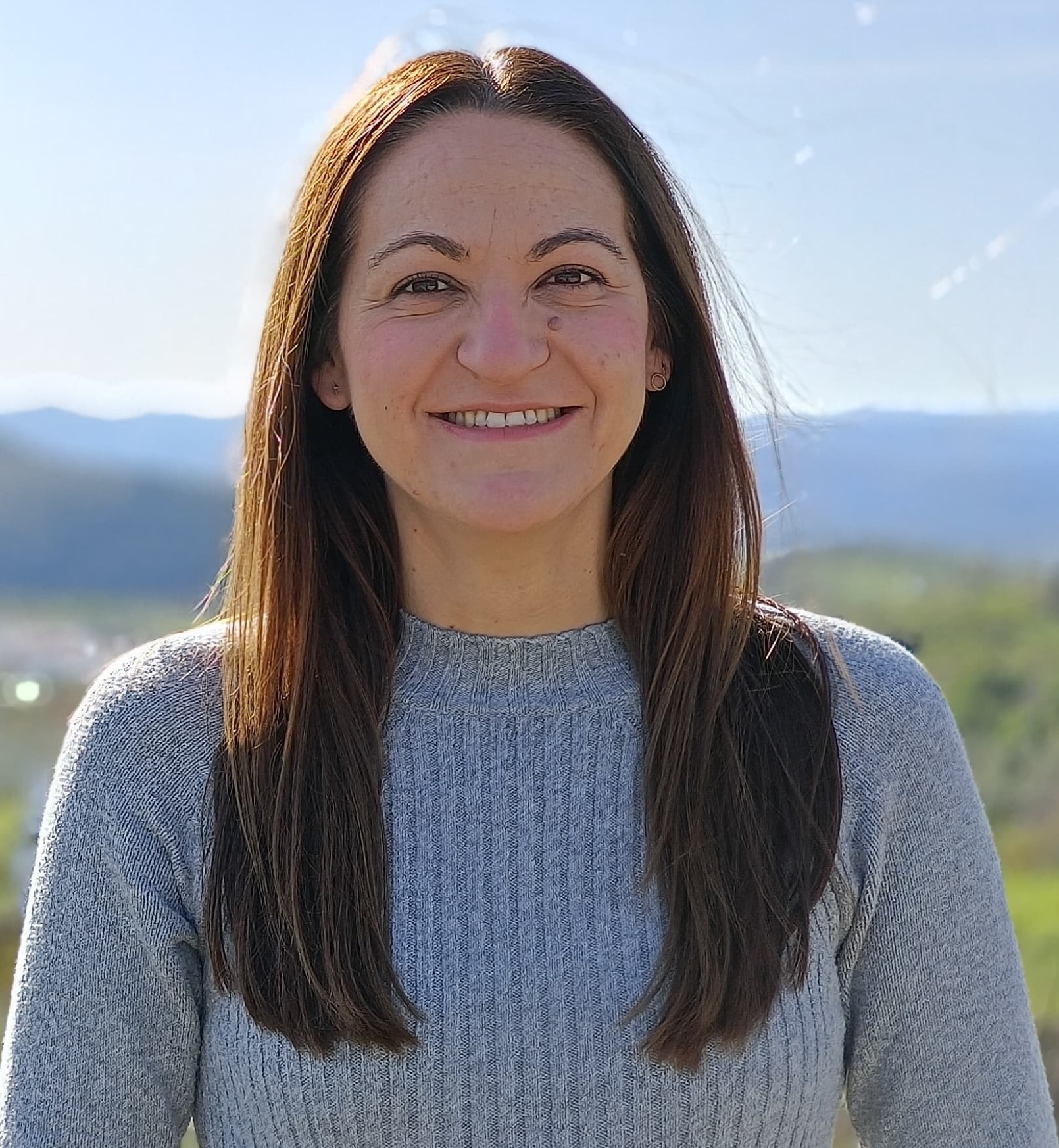
Short bio: Vanesa Guerrero is an Associate Professor in the Department of Statistics at the Universidad Carlos III de Madrid. She obtained her Ph.D. in Mathematics from the Universidad de Sevilla in 2017. Her research lies at the intersection of operations research, statistics, and machine learning, with a focus on integrating mathematical optimization techniques into data analysis models, particularly to enhance interpretability and incorporate desirable structural properties. She has co-authored numerous papers published in renowned journals (e.g. Mathematical Programming, European Journal of Operational Research, or Journal of Multivariate Analysis, among others) with an extensive international network of collaborators. Her work has been recognized with multiple awards, including the L’Oréal–UNESCO For Women in Science Award, the Vicent Caselles Prize of the Real Sociedad Matemática Española (RSME), and the Ramiro Melendreras Prize of the Sociedad de Estadística, Investigación Operativa y Ciencia de Datos (SEIO), among others. She is actively engaged in the organization of scientific events and in science outreach initiatives, promoting STEM education and public engagement with data science.
Title: Mathematics beyond the classroom: two experiences in science communication
Abstract: Creative science communication can play a key role in making mathematics more accessible, relevant, and socially meaningful for young people. This talk presents two outreach initiatives developed in Spain that use different approaches to foster scientific curiosity, critical thinking, and awareness of the opportunities offered by higher education.
The first project, Data Science Gymkhana, is an annual activity launched in 2020 within the STEM4Girls program at Universidad Carlos III de Madrid. Designed for secondary school students, the Gymkhana promotes data literacy and the scientific method through collaborative problem-solving. Each edition focuses on one of the United Nations Sustainable Development Goals, combining a keynote talk by a researcher with hands-on data analysis challenges that encourage participants to explore how mathematical and statistical tools can contribute to addressing real-world societal issues.
The second initiative, Your Face Sounds Familiar, is an outreach program developed by researchers from Universidad de Sevilla and Universidad Carlos III de Madrid to bring science and the university experience closer to students living in rural areas. Through interactive sessions led by researchers from diverse disciplines, including mathematics, the project introduces participants to academic careers, showcases the role of research in solving contemporary problems, and seeks to reduce geographical and social barriers that may discourage young people from pursuing higher education.
Although they target different contexts, both projects share a common goal: to present mathematics not as an abstract discipline but as a powerful tool for understanding the world, making informed decisions, and creating opportunities. The talk will describe the design of these initiatives, discuss the lessons learned from their implementation, and reflect on how creative dissemination activities can broaden participation in the mathematical sciences and inspire the next generation of students.
Neeldhara Misra, Indian Institute of Technology, Gandhinagar [ORCID]
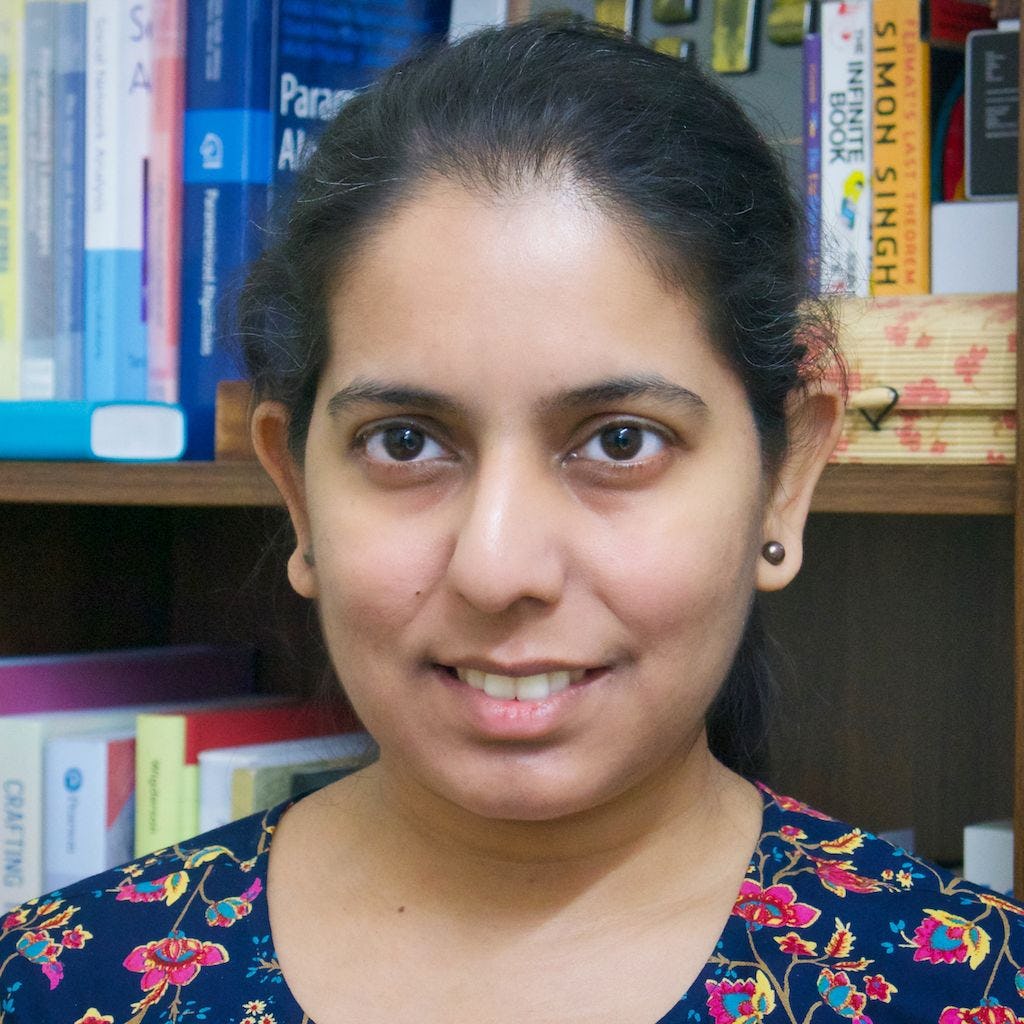
Short bio: Neeldhara Misra is a computer scientist and Associate Professor in the Department of Computer Science and Engineering at the Indian Institute of Technology Gandhinagar, India. She received her Ph.D. in Theoretical Computer Science in 2012 from the Institute for Mathematical Sciences. Her research interests are the interplay of structural graph theory and graph algorithms, parameterized complexity, computational perspectives on combinatorial games, voting mechanisms, and fair allocations of resources. Her work has been published in leading international conferences such as SODA, AAAI, and AAMAS. She is also known for her contributions to computer science education and outreach, particularly through initiatives that promote computational thinking and accessible learning.
Title: Building Joyful Interactives
Abstract: Reading about an idea and wrestling with it are different cognitive acts. A well-designed interactive experience, either tactile or virtual, can potentially merge these aspects: when a learner plays around with concrete examples and experiments with parameters, the ideas involved become conjectures to test, fix, and potentially generalize.
A productive interactive experience is not only about ornamental animation or frictionless learning; it is about agency, immediate feedback, and the productive surprise of being wrong in an informative way. Over several years of building small, purpose-built web interactives, I have found that key decisions are structural: what can the learner change, what remains fixed, and how quickly does the system reflect their move? The process of making interactives is iterative and AI-assisted coding has changed the economics: a pedagogical hunch can become an afternoon prototype, making experimentation cheap enough to take seriously. The human in the loop remains responsible for mathematical correctness, purpose, taste, and care.
This talk will be a case study of interactive experiences (also known as explorable explanations) I have enjoyed working with, along with commentary on what makes them fun and useful.